



Automation: The End of Manual Work
The Death of “Manual Work” Is Already Here (You’re Just Still Doing It)
Manual work isn’t slowly dying; it’s already dead. What’s alive is the habit of doing things the hard way. While you and your team are still clicking, copying, and chasing tasks, entire workflows are quietly being taken over by automation and AI. The uncomfortable truth: much of what fills your day could be handled faster, cheaper, and more reliably by systems you haven’t set up yet.
Everyday Tasks You’re Still Doing That Should Be Automated
Look at your average week. How much of it is true problem‑solving, and how much is digital shoveling? These everyday tasks are already prime candidates for automation:
Inbox triage: routing inquiries, sending standard replies, tagging, and filing emails based on rules or AI understanding.
Scheduling and reminders: booking meetings, follow‑up nudges, renewal reminders, and deadline prompts across your tools.
Data entry and updates: copying details from forms into CRMs, spreadsheets, or project boards, then updating statuses.
Reporting and summaries: weekly metrics, client updates, meeting notes, and performance snapshots can be auto‑generated from raw data.
Customer follow‑ups: onboarding sequences, check‑ins after purchase, and feedback requests triggered by behavior, not memory.
None of these require your unique genius. They require a system. Yet most people still do them by hand, one click at a time.
Why Teams Stay Stuck in Manual Mode
If automation is so accessible, why are so many teams still drowning in repetitive tasks? It usually comes down to three things:
Fear: fear of “breaking something,” of being replaced, or of trusting AI with customer‑facing work. So they cling to familiar inefficiency.
Lack of systems thinking: most people are trained to complete tasks, not design processes. They know how to reply to an email, not how to architect a repeatable flow that handles 1,000 of them.
Bad or fragmented tools: disconnected apps, clunky software, and no central “brain” to coordinate everything make automation feel fragile and frustrating.
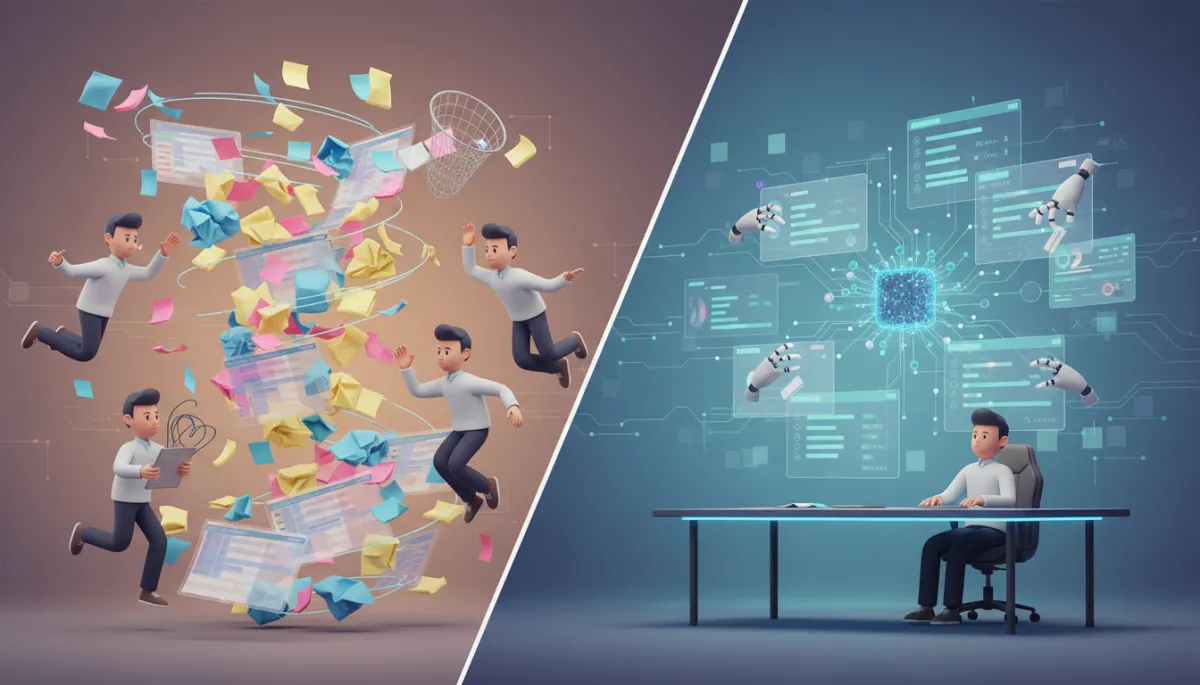
Teams that embrace systems thinking reclaim hours weekly and unlock new capacity.
The Hidden Costs of Staying Manual
Manual work doesn’t just feel slow; it quietly drains your business in three dangerous ways:
Time: hours lost to copy‑paste tasks are hours you don’t spend on strategy, creativity, or relationships. That’s opportunity cost you never see on an invoice.
Inconsistency: humans get tired, distracted, and forgetful. Processes drift, steps are skipped, and quality varies from day to day and person to person.
Missed revenue: slow responses, dropped leads, and patchy follow‑up mean money left on the table. Automation doesn’t “forget” to send the offer or schedule the call.
The longer you keep operations manual, the more you normalize these losses as “just how it is.”
AI + the Engine: Replacing Workflows, Not Just Tasks
The real shift isn’t about automating a few steps; it’s about replacing entire workflows. AI paired with a coordination layer like the Engine can:
Listen for triggers across your tools (a new lead, a payment, a support ticket).
Decide what should happen next based on rules and AI judgment.
Execute the steps end‑to‑end: messages, tasks, updates, and reports, all without you lifting a finger.
Instead of hiring another coordinator, you design a workflow once and let the Engine and AI run it 24/7 with no fatigue and perfect memory.
From Doing Work to Designing Systems: The Let Go Boss Shift
The Let Go Boss philosophy is simple: your real job isn’t to be the hardest worker; it’s to build the machine that does the work. That means:
Documenting how you want things done once, instead of re‑doing them forever.
Turning that blueprint into an automated workflow powered by AI and the Engine.
Stepping back into the role of designer, editor, and leader, not perpetual task‑doer.
Manual work is already obsolete. The only question is whether you’ll keep doing it, or finally let go, build the systems, and become the boss of a business that mostly runs itself.